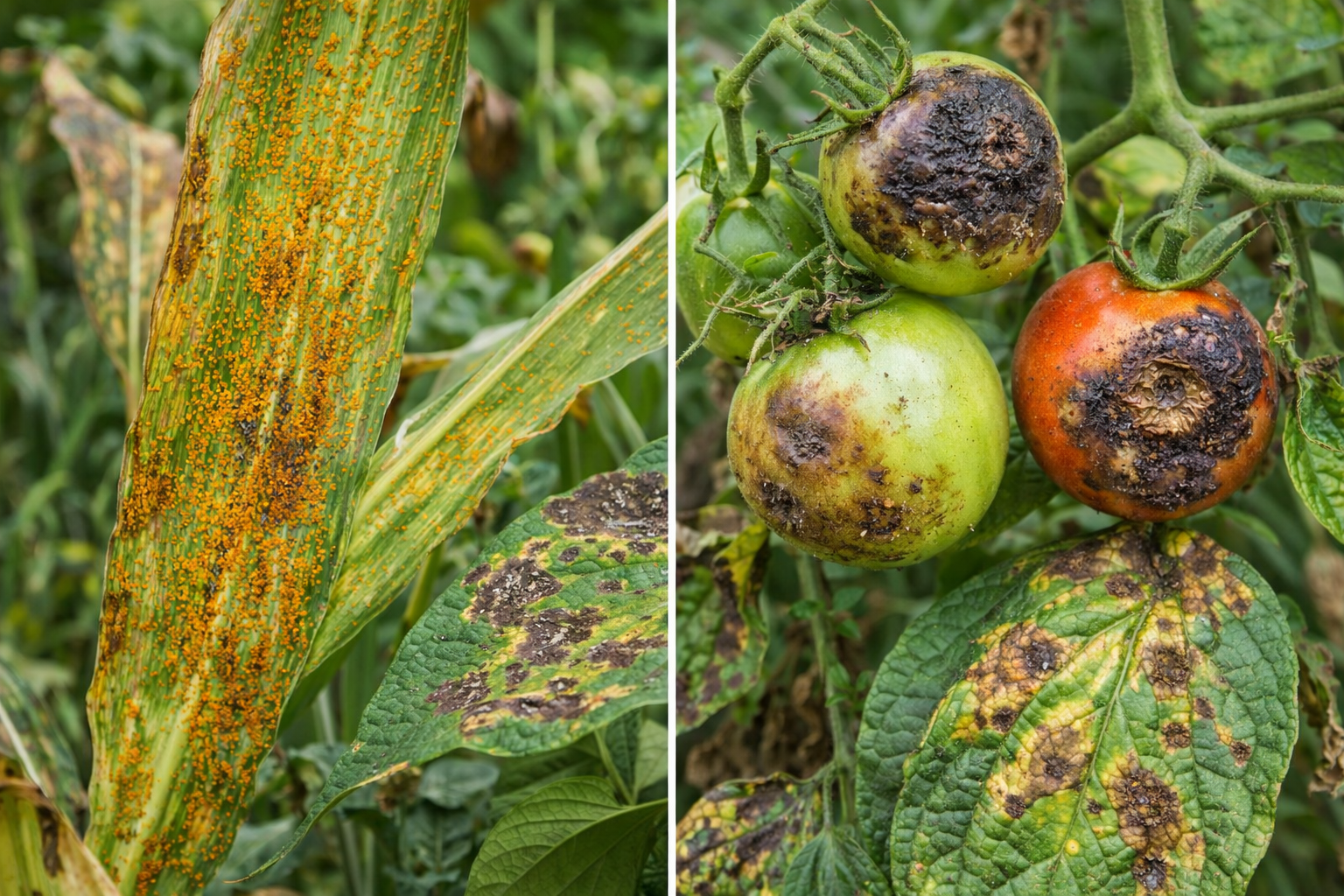
Crop diseases are one of the biggest threats to farm productivity. Many farmers lose large portions of their harvest due to fungal, bacterial, and viral infections that attack crops in the field.
Understanding common crop diseases and how to treat them helps farmers protect their crops, increase yields, and improve farm profitability.
This guide explains the major crop diseases affecting farmers and how they can be treated or prevented.
1. Powdery Mildew
Affected Crops
-
Cucumbers
-
Pumpkins
-
Beans
-
Tomatoes
-
Squash
Symptoms
-
White powder-like substance on leaves
-
Yellowing leaves
-
Stunted plant growth
Causes
Powdery mildew is caused by fungal infections that spread in warm and humid conditions.
Treatment
-
Apply fungicides such as Sulfur-based fungicides
-
Improve air circulation between plants
-
Remove infected leaves
-
Avoid overcrowding crops
2. Downy Mildew
Affected Crops
-
Onions
-
Cucumbers
-
Spinach
-
Lettuce
Symptoms
-
Yellow patches on upper leaf surfaces
-
Grey or purple mold under leaves
-
Leaves eventually dry and die
Treatment
-
Use resistant crop varieties
-
Apply recommended fungicides
-
Avoid watering leaves directly
-
Practice crop rotation
3. Bacterial Wilt
Affected Crops
-
Tomatoes
-
Potatoes
-
Eggplants
-
Peppers
Symptoms
-
Sudden wilting of plants
-
Leaves remain green but droop
-
Brown discoloration inside stems
Treatment
-
Remove infected plants immediately
-
Use certified disease-free seeds
-
Rotate crops
-
Improve soil drainage
4. Leaf Spot Disease
Affected Crops
-
Maize
-
Beans
-
Tomatoes
-
Vegetables
Symptoms
-
Brown or black spots on leaves
-
Yellow halo around spots
-
Leaves dry and fall off
Treatment
-
Apply fungicides
-
Remove infected leaves
-
Avoid overhead irrigation
-
Ensure good plant spacing
5. Rust Disease
Affected Crops
-
Maize
-
Wheat
-
Beans
Symptoms
-
Orange or brown powdery spots on leaves
-
Reduced plant growth
-
Lower crop yields
Treatment
-
Plant resistant varieties
-
Apply fungicides early
-
Remove infected crop residues
6. Fusarium Wilt
Affected Crops
-
Tomatoes
-
Bananas
-
Beans
-
Vegetables
Symptoms
-
Yellowing of leaves
-
Wilting plants
-
Brown discoloration in plant stems
Treatment
-
Use resistant varieties
-
Practice crop rotation
-
Improve soil drainage
-
Avoid planting infected seedlings
7. Late Blight
Affected Crops
-
Potatoes
-
Tomatoes
Symptoms
-
Dark patches on leaves
-
White fungal growth under leaves
-
Rapid plant death
Treatment
-
Apply fungicides early
-
Avoid excessive irrigation
-
Destroy infected plants
8. Early Blight
Affected Crops
-
Tomatoes
-
Potatoes
Symptoms
-
Brown circular spots with rings
-
Leaves turning yellow
-
Reduced fruit production
Treatment
-
Use crop rotation
-
Apply fungicides
-
Remove infected leaves
9. Root Rot
Affected Crops
-
Beans
-
Vegetables
-
Fruits
Symptoms
-
Roots turn brown or black
-
Plants grow slowly
-
Plants eventually die
Treatment
-
Improve soil drainage
-
Avoid overwatering
-
Use disease-free seedlings
10. Anthracnose
Affected Crops
-
Mangoes
-
Beans
-
Tomatoes
-
Avocados
Symptoms
-
Dark sunken lesions on fruits
-
Leaf spots
-
Fruit rot
Treatment
-
Apply fungicides
-
Remove infected fruits
-
Improve air circulation
11. Maize Lethal Necrosis (MLN)
Affected Crops
-
Maize
Symptoms
-
Yellow streaks on leaves
-
Drying maize plants
-
Poor grain development
Treatment
-
Use certified maize seeds
-
Control insect vectors
-
Rotate crops
12. Banana Panama Disease
Affected Crops
-
Bananas
Symptoms
-
Yellow leaves
-
Wilting plants
-
Plant death
Treatment
-
Plant resistant banana varieties
-
Improve soil health
-
Remove infected plants
13. Coffee Leaf Rust
Affected Crops
-
Coffee
Symptoms
-
Orange powder on leaf undersides
-
Leaf drop
-
Reduced coffee yield
Treatment
-
Apply fungicides
-
Plant resistant coffee varieties
-
Maintain good farm hygiene
How Farmers Can Prevent Crop Diseases
Preventing crop diseases is easier and cheaper than treating them.
Farmers should follow these practices:
Use Certified Seeds
Quality seeds reduce disease risks.
Practice Crop Rotation
Changing crops breaks disease cycles in the soil.
Maintain Field Hygiene
Remove infected plant materials.
Proper Plant Spacing
Improves air circulation and reduces fungal growth.
Regular Farm Inspection
Early detection helps control diseases quickly.
Importance of Crop Protection
Farmers who protect their crops from diseases enjoy:
-
Higher yields
-
Better crop quality
-
Higher farm profits
-
Reduced production losses
Investing in quality agricultural inputs and proper farm management helps farmers maintain healthy crops.
Supporting Farmers with Quality Agricultural Solutions
Farmers need reliable agricultural inputs to manage crop diseases effectively. Using quality crop protection products and proper farming techniques helps farmers protect their harvests and improve productivity.
At Farmers Centre, farmers can find trusted agricultural solutions designed to support healthy crop production and better farm yields.
Comments
0 comments